Where AI Actually Helps in Product Data
We do not believe AI should decide what your product is. We do believe it should stop your team retyping what is already printed on the pack. In xyxle, AI is applied to the tasks that are slow, repetitive and error-prone when done by hand:
- reading product names, descriptions and brand texts from packaging
- extracting ingredient lists and detecting allergens
- reading nutrition tables into structured per-100g / per-serving fields
- capturing net content, storage instructions, origin and preparation
- suggesting the right GPC category for classification
- drafting translations that keep your terminology consistent
- proposing field mappings and transformations for retailer formats
- flagging values that look inconsistent with the rest of the record
- pre-filling attributes so people review instead of type
The result? Your people spend their time checking and approving rather than transcribing. Fewer typos in allergen lists, fewer wrong units in nutrition tables, and new products ready for retailers in a fraction of the time.
Everything below runs inside the same GDSN-based platform you use to manage, validate and syndicate product data, so AI-assisted records follow the same rules as every other item.
→ Learn more about the xyxle PIM platformAI Data Entry: From a Photo of the Pack to a Structured Record
The fastest way to get a product into xyxle is to show it the packaging. Here is how it works:
- Upload a photo of the packaging or the artwork file. A phone picture of the back of the pack is enough.
- xyxle reads the label and identifies the relevant sections: name, ingredients, nutrition, allergens, net content, storage, origin.
- Each value is placed in the matching GDSN field, in the right format and unit, rather than dumped into a free-text box.
- Suggested values are shown side by side with the source image so the reviewer can check them in seconds.
- The reviewer accepts, corrects or rejects, and the record goes through the same validation as any manually entered item.
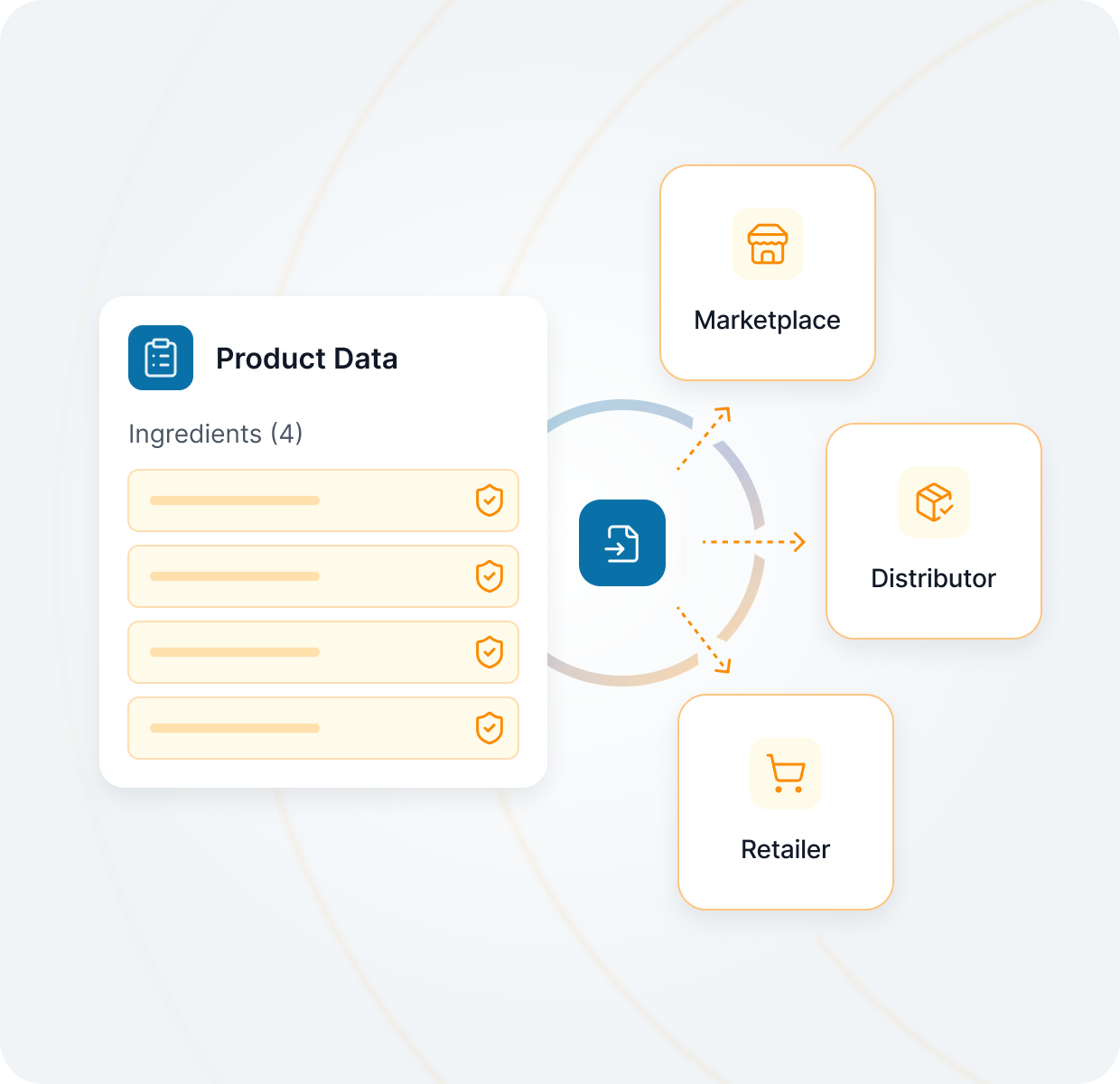
What AI Data Entry Captures
The information retailers and regulators ask for most is also the information printed on every pack. AI data entry captures it and places it in the correct GDSN attributes:
- Product name, description, brand and sub-brand
- Net content, drained weight and serving information
- Ingredient list with allergens highlighted as declared on the pack
- Full nutrition declaration, per 100 g/ml and per portion
- Storage and preparation instructions, country of origin, on-pack claims and certifications
Because the values land in structured fields rather than free text, they are immediately usable for GDSN submission, retailer exports, article passports and 2D barcode content.
→ See the full list of xyxle featuresAI Translation, With a Human Check When You Expect One
Selling in Switzerland and across Europe means every product exists in several languages at once. Sending texts to a translator by email and pasting the results back is slow, and it is where inconsistencies creep in. xyxle translates inside the record:
- Translates into German, French, Italian and English, the languages your Swiss and European retailers actually require.
- Works field by field, so a translated ingredient list stays an ingredient list and a claim stays a claim, in the correct GDSN attribute.
- Keeps brand names, product names and your preferred terminology consistent across every language.
- Human check when you expect it: route translations to a reviewer per language, per product group or only for sensitive fields such as allergens and legal texts.
- Every language carries its own status, so a retailer never receives a translation that is still waiting for review.
You choose where the human check sits. Some teams review every translation; others let marketing texts flow automatically and reserve review for anything that touches safety or legal compliance.
You Decide the Level of Control
AI automation is only useful if you can trust what comes out of it. In xyxle, that trust is configured, not assumed:
- Review everything: every AI suggestion waits for a person before it enters the golden record.
- Review what matters: auto-accept descriptive fields, require sign-off on allergens, nutrition and regulatory text.
- Role-based: decide who may accept AI output for which product groups and languages.
- Traceable: AI-generated values are marked as such in the field-level history, alongside who reviewed them and when.
- Validated: GDSN and GPC checks run on AI-entered data exactly as they do on manual entries before anything is published.
Start cautious and loosen the controls as confidence grows. Most teams begin by reviewing everything and, within a few weeks, are auto-accepting the fields that consistently come through clean.
AI Mapping for Retailer and Channel Formats
Every retailer template is a little different, and setting up a new export channel used to mean a spreadsheet of field-to-field mappings and a call to IT. AI mapping shortens that:
- Proposes which of your fields map to which target columns in a new retailer or marketplace template
- Suggests the transformation when formats differ: unit conversions, date formats, code lists, concatenated texts
- Flags target fields you have no source data for, before the first rejection tells you
- Saves the mapping as a reusable channel so the work is done once, not per upload
Why this matters for your business:
- New channels go live in days instead of weeks
- Fewer surprise rejections from unit mismatches and missing fields
- Product teams set up channels without waiting for IT
- The same rules apply on every export, so partners get consistent data
Map once, reuse forever. The AI proposes, a person confirms, and the channel runs on schedule from then on.
Built on Structured Data, Not Guesswork
A lot of "AI for product content" tools generate plausible-sounding text. That is the last thing you want in an allergen declaration. xyxle's AI features are designed around the opposite principle:
- AI output lands in the GDSN data model, never in an unstructured blob you then have to sort out by hand.
- Values come from your pack, your artwork or your existing data. Where the source is unclear, the field is left for a person, not guessed.
- The same validation rules, roles and approvals apply to AI-assisted records as to everything else in xyxle.
- Field-level history shows what the AI proposed, what the reviewer changed and what was finally published.
- AI features are switched on per client and per workflow. If you do not want them for a product group, they are simply off.
The aim is a record you would sign off on yourself, produced in a tenth of the time.
Automation where it adds real value, people where judgement matters. That is the whole design.
Where Teams Use AI Automation First
You do not have to switch everything on at once. These are the situations where customers typically start, because the manual alternative is most painful:
- New product launches: get a complete, translated record from the final artwork before the product ships.
- Seasonal and promotional ranges: hundreds of short-lived SKUs that are not worth a day of manual entry each.
- Onboarding an acquired brand or a new supplier catalogue with no usable digital data.
- Retailer-driven relaunches that suddenly require new attributes across the whole assortment.
- Entering a new language market where every description, claim and instruction needs translating at once.
Whether you are a brand launching twenty products a quarter or a retailer onboarding hundreds of suppliers, the pattern is the same: let the AI do the first pass, let your experts do the last.
Want to see it on your own packaging? Bring a product to the demo and we will enter it live.
→ Book a demo with your own productAI Where It Adds Value, People Where It Matters
xyxle is built for companies where product data accuracy is not optional. AI data entry and AI translation exist to remove the repetitive work that causes most errors in the first place, while the approval workflow, validation rules and audit trail make sure a person is always accountable for what gets published.
The same golden record feeds GDSN, retailer channels, article passports and 2D barcode content, so the time you save at entry is saved again at every export.
Whether you manage 50 products or 50,000, the work of getting them right should not scale with headcount.
.png)